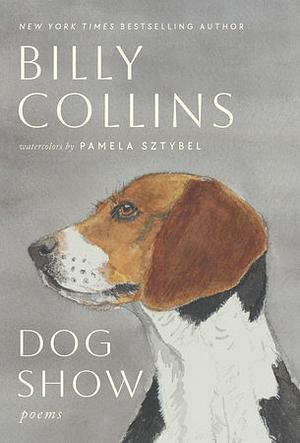
Dog Show — a collection of short poems by Collins and beautiful artwork by Pamela Sztybel — is a quick trot of a collection that, as often is the case with Collins, seem light on the surface and then suddenly a line comes along that will just floor you. There’s even a cat poem in here.
Here is the subtitle for this project known as the Internet Phone Book: a directory for exploring the vast poetic web.
The Poetic Web is a phrase I have stumbled on now and then, and I can’t remember now when or where I stumbled on the Internet Phone Book project, but I sure am glad I did. It’s a physical book made for exploring hundreds (actually, 737) of websites that off the regular paths — no social media platforms, no giant corporations. Just regular people making websites as passion projects, and maybe even mostly for an audience of one (themselves). The Poetic Web, in my mind, indicates personality of websites in their quirky coding, wording, artwork and more.
A more formal definition: “The Poetic Web is a practice and process towards a place: a web that is more handmade, expressive, and intimate; where site-making is a political, personal, and poetic act. This is a growing collection of projects, tools, and teachings around it.” — via The Poetic Web (Chia Amisola)
I’ve begun exploring more of the sites found in the Internet Phone Book itself more thoroughly in the new year (I wrote about this in a post the other day). I’ve highlighted about 50 sites that I want to explore, and have done a little touring already of some others and found it quite fun to see what people are up to or have been up to. The sites inside the book were either sent in my website owners or recommended to the editors.
The collection of sites here is curated and edited by Kristoffer Tjalve and Elliott Cost, and both add essays about the Indie Web/ Poetic Web to the collection, along with a handful of other quite interesting essays that explore how our online homes represent who we are, as identify markers, and reminders of all the magical possibilities that still exist for us, if we can just break free from the silos that the huge corporations have built for us, to make money off our data and our privacy.
From the introduction: “The web is called the web because it is a network of hundreds, thousands, millions, billions of sites. To keep the web alive requires the active participation and care of people like you.” — Kristoffer Tjalve
Just look at some of the titles of the essays, and tell me you are not intrigued:
From My To Me (Olia Lialina)
Domain Naming (Chia Amisola)
A View Source Web (Garry Ing)
My Website Is A Shifting House Next To A River Of Knowledge. What Could Yours Be? (Laurel Schwultst)
Coding In Situ (Benjamin Earl)
Exploring The Vastness Of A Website(Elliott Cost)
Disclosure: I am writing this review but the book is no longer available. It was an independent endeavor, and they raised money from readers like me before publishing the book, and it seems as if they were able to successfully fund the project and now the books are gone. Sorry. (On a positive note, though, the cover also says: Issue One, 2025 — indicating the project might have future iterations).
A few years ago, I moved off Goodreads and into Storygraph. I miss elements of the community from Goodreads, but couldn’t stand the connection to Amazon. What I do love about Storygraph is the charts and graphs it generates. I still make a goal of 100 books a year, and consistently blow past it.
According to Storygraph, in 2025, I read 127 books, across 34,495 pages. Almost all of these books were library books from our local library. I buy very few books anymore, but I love our library system and appreciate the resources it has on hand (including the beloved Inter-Library Loan program).
You can view all of my reviews and books here. Connect with me if you are also on Storygraph, too. I’d love to see what you are reading.
This chart shows my experiences with the books I read in 2025, based on responses I give after reading a book.
And this chart shows all of the many varied genres of books I sat with. I do have a lot of interests and am always up for any kind of book that catches my attention.
A few weeks ago, I finally got the Internet Phone Book delivered to my house. I can’t remember now where I first heard about it but this project to gather together websites that represent the independent web and small websites — all outside the large companies and social media platforms that now dominate our connected lives — appealed to me. The fact that it was in book form, published independently as an act of love, also got my attention. (Interestingly, in the introduction, one of the curators noted that they built the book as a website first, in HTML, and then later it became a paper book about websites).
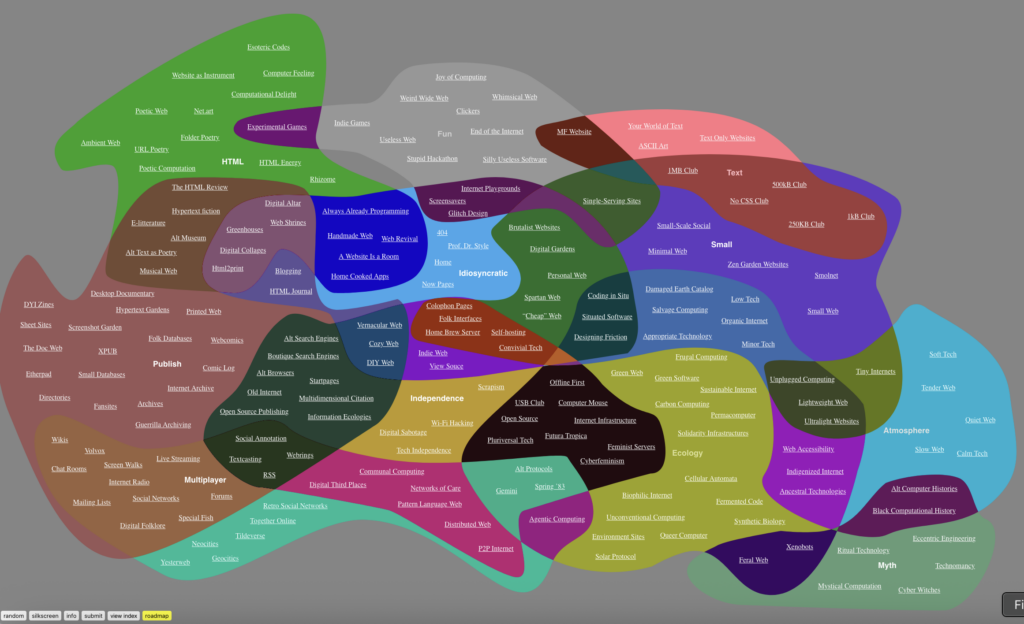
The book is a collection of 737 entries, curated and edited by Kristoffer Tjalve and Elliott Cost, and peppered with links sent in by the artists, writers, photographers, game designers and others who heeded the call to submit a website link (something I missed). Tjsalve and Cost then organized the indie web links under a series of themes: Atmosphere, Ecology, HTML, Idiosyncratic, Independence, Multiplayer, Myth, Play, Publish, Small and Text.
There are also a series of essays about the Internet and the idea of small, personal websites as passion projects, and assorted sketch drawings, HTML code that read on the page like poetry, and more. It’s a beautiful project, right up my alley. And apparently, up the alley of others, too, since the self-published book has already sold out.
As I took an eyeball tour of the 737 sites listed in the Internet Phone Book, I became fascinated by the short descriptions that some of the website owners left (not all wrote a blurb, which is too bad) and I began using my yellow highlighter to mark sites that I want to visit. I can’t tell you how happy I am to stumble upon this kind of link-gathering project in book form. (Which, to be fair, has been done in different forms by others in the past — so this is not necessary an original idea but the way this book is put together, and its metaphorical anchor, really appeals to me).
And then I decided: why not make my explorations an inquiry project for 2026?
So what I intend to do is to slowly, over time, visit the 50-plus sites that I highlighted in my book and report out. This will document my travels to these chosen indie web sites, and maybe showcase them to a wider audience (is there anyone out there?) and perhaps connect me with more like-minded folks. At the very least, given the tone of the short descriptions, I suspect I will be entertained by the oddities and passions of the makers. As a bonus, if I come across any interactive sites that resonate with our DS106 Daily Create projects, I will submit them into the Daily Create assignment bank.
I plan to start these explorations after January 1. Until then, I am going to read through the essays and better understand the underpinnings of The Internet Phone Book project.
BUT — I would like to share the diagram/map that Tjsalve and Cost share near the start of the phone book. This Diagram Website is pretty cool to explore. As I understand it, this was one way they began thinking of the indie web, and how they started to narrow down themes.
Try the Random Button at the bottom left of the chart and see where it takes you. Let the explorations begin.
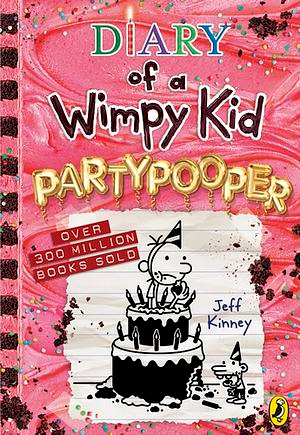
I’ve spent 20 November/Decembers reading Jeff Kinney and his Diary Of A Wimpy Kid series — first as a read-aloud for my boys, and then as a teacher keeping up with the reading trends of my students, and now? It’s tradition, and one I do enjoy, even if the books are a bit of fluff.
“Is Greg still in middle school?” one of my sons, home for the holidays, asked, as he picked up the latest book in the series — Partypooper — and I nodded in affirmation. Some things never change.
In this latest, Greg plans a birthday party, and as expected, it all goes awry. But the sheer number of gags and jokes continues to show Kinney at the top of his game for this kind of story, with visual puns and pop culture jabs, and Greg always on the lookout for something better to come along, only to be foiled by family, friends and circumstance.
National Public Radio did a recent interview with Kinney that I found interesting. Among the things that Kinney talks about is how he writes dozens of jokes and gags each day and then culls through them to find places in his books, and that every single Wimpy Kid book is exactly the same page length (217) so that all of his books fit nicely on a bookshelf.
I don’t see as many students reading Kinney as I used to but there is still a large audience out there — he has sold more than 350 million books — that is a mind-boggling number in this day and age of screens and distractions.
This morning’s prompt at DS106 Daily Create was to feature a favorite book and I always go back to A Wrinkle In Time. This book really got its claws in me early with its strangeness and the characters and plot have lingered with me for decades.
The graphic biography of Ruth Asawa — An Artist Takes Shape — is a beautiful exploration of an amazing wire artist (among other mediums) by Sam Nakahira. It captures the pain of Asawa’s childhood during internment following WW2 and then how she finds and follows her muse to become an artist. The illustrations are beautiful, and give love to Asawa.
Fans of Bruce Springsteen know that the making of the seminal rock and roll album Born To Run was arduous. In Tonight In Jungleland, by Peter Ames Carlin, we get the gritty details of how Bruce and his band worked to the bone to make the album that would catapult Springsteen into stardom (and then a few albums later, into super-stardom).
The writer had access to the band and to the tapes, and to some documentation from the recording studio, giving this account of the making of a single album a depth that few other accounts get at. We see Springsteen struggling to find the narrative line between songs, sitting deep in thought for long stretches of time, working through the musical elements. Then, being overcome by deep doubt (even tossing the master acetate into a hotel pool in frustration), before realizing the masterpiece that the album is now seen as, by many.
Even if you are not a fan of Bruce, this portrait of a rock and roll musician as an artist working on their art is worthwhile, at least to me.
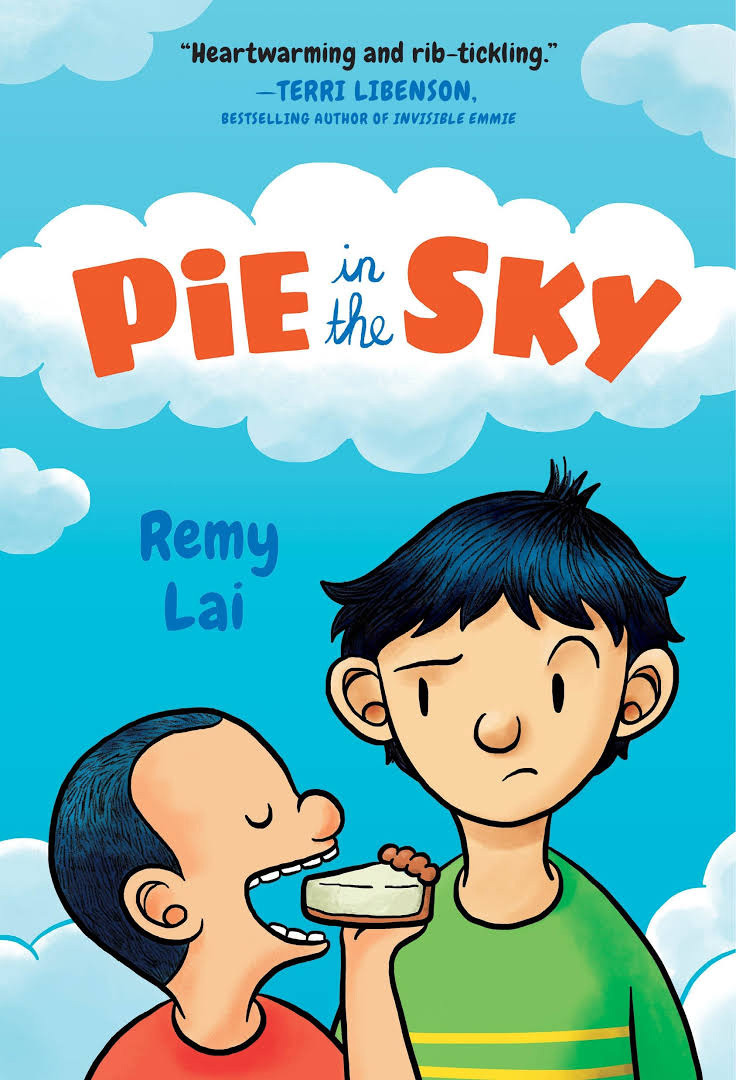
Remy Lai’s novel — Pie In The Sky — is a mishmash of book styles that works nicely together, as the prose mixes with comic panels for a hybrid story, weaving together a complex narrative of the young protagonist — Jingwen — a young immigrant to Australia who is struggling with school, loss and learning a new language.
The making of cake and pie is a key plot component, as Jingwen and his little brother sneak time when their single mom is at work to make cakes that their father, now passed away in a terrible car accident, used to make with Jingwen as he dreamed of a shop they would open when they moved to Australia. Back home, his grandparents still run a cake shop. Baking is in the family blood.
It’s the tragic loss of the father that is at the emotional heart of this book, as we slowly learn how Jingwen blames himself for what happened (his father was getting a special birthday cake for Jingwen when he was killed) and it’s clear that his mother is not grappling well with the loss of her husband and the move they’ve made to Australia. She’s working long hours, leaving the young boys alone for long stretches of time, when they sneak without permission to make cakes.
Meanwhile, Jingwen’s younger brother — Yanghao — is a live-wire character, full of energy and curiosity. He’s certainly a handful, and the relationship between the two brothers is another key component here.
There are plenty of moments of fun and pitfalls in Pie In The Sky and Lai has a nice touch with her comics and a tenderness with her characters that move the story along on lines of being a new immigrant in a place where you don’t know the language. Lai develops her characters, too, so that by the end, when the plot pieces fit together, it all makes sense for the characters.
This book is appropriate for upper elementary and middle school readers.