Internet Phone Book Explorations: Fungal

(This is one of a series of periodic explorations of the Indie Web via the Internet Phone Book project. I am on a personal exploration but also hope to lift the profile of sites I have found.)

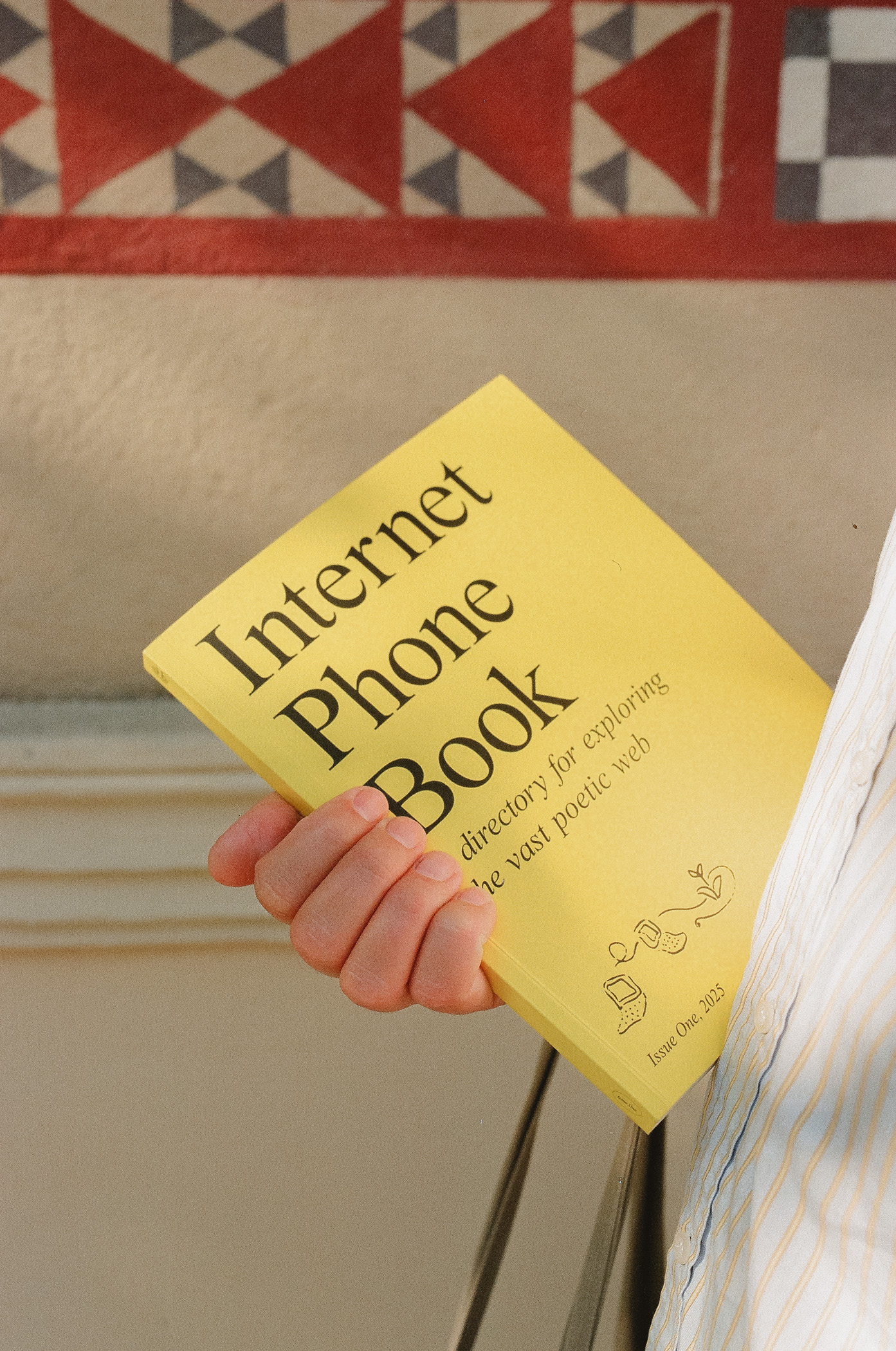
This morning, I dug out the Phone Book and started plugging in some phone numbers, just to see where it might take me. I found some fun little corners but this one — 265 on the dial box — brought me to what seemed to be a Wikipedia page about Hypha (fungus), and then as I was looking, the page began to sprout a layer of fungus. The more time I spent watching, the more the tendrils grew until the page was filled. Pretty cool.

Raphael Bastide, the site creator, calls it a “post human tribute to Wikipedia” in the short blurb in the phone book.

This image comes from the Fungal site

On the Fungal site, Raphael writes: “It also represents a comforting example of what humanity can do: collaborating voluntarily on the largest knowledge project in our history. I consider Wikipedia being the descendant of Enlightenment’s encyclopédistes and free software movement, and I think such project made by the people, for the people are beautiful remains of the early Web’s utopia.”

I want to shout out another interesting project of Raphael — Carecore — a place to take care of seeds and flowering ideas. And I love that it was an accident. I tried to add a stem/seed but the plant was full. I’m gonna grab the RSS feed and see what happens.

Peace (poking into the odd corners),
Kevin

PS — There are other cool sound projects at Raphael’s site, too.

Internet Phone Book Explorations: Mudlark Theory

(This is one of a series of periodic explorations of the Indie Web via the Internet Phone Book project. I am on a personal exploration but also hope to lift the profile of sites I have found.)

In the Internet Phone Book, for an invitation to his website, Ryan T writes: “mudlark theory is an interdisciplinary labyrinth of art and information superimposed onto a blueprint of the metropolitan museum of art. yeah.”

Ok, then, I’m interested.

This site was built in Neocities (I notice quite a few sites in the book built on that platform) and it is indeed, designed as a floor plan of the MET, with links leading you off in various directions, each with the links randomized (based on curation by Ryan, if I understand his explanation), so in the “library,” you get led to pieces on the Internet about books, writing and literacy; the “poet’s read, every 2 am” room sends you off to a poem; and the “what the fuck” space brings posts with the word “fuck” to your door (One was written nearly like a piece from McSweeney’s).

As Ryan notes, though, there are a lot of dead links and forays into nothingness. That’s OK, though. I enjoyed the thinking behind the Mudlark Theory site, as an exploration space for his curation efforts, and I read a few poems, took in a piece about Joan Didion in the El Salvador airport, and saw John Waters give a commencement speech. I clicked on the Mrs. Who room button a few times, disappointed that no Wrinkle In Time rabbit hole appeared.

Safe travels back at ya, Ryan.

Peace (lost in the floor plans),
Kevin

Internet Phone Book Explorations: Lee Tusman

(This is one of a series of periodic explorations of the Indie Web via the Internet Phone Book project. I am on a personal exploration but also hope to lift the profile of sites I have found.)

I was wandering the book, hoping for some interesting site with artwork. There are, of course, many options in the phone book. I landed on a site by Lee Tusman and found myself in an exploration mode. Lee has a lot of projects here.

The Quilt Poems site caught my eye, so I spend some time with these generated poems, which uses quilt patterns as its code underneath. I don’t quite understand it, but I found it fascinating (and appreciate how he has kept it all open sourced).

Another project of his is called Context Collapsed and is a sort of multi-media collage. For the live site, when you click the mouse on the collage, it reconfigured itself with a mix of words, patterns, colors, images — all of it compacted together (thus, the collapse).

Finally, in one of the other projects – this from a workshop — he shares an informative zine with open source tools for artists. I love when folks like Lee share like this. It gives a sense that we are helping each other be creative in our endeavors. Thanks, Lee!

Peace (and art),
Kevin

PS — He has a podcast, too, that merges art and code and more.

Internet Phone Book Explorations: Jenn Schiffer

(This is one of a series of periodic explorations of the Indie Web via the Internet Phone Book project. I am on a personal exploration but also hope to lift the profile of sites I have found.)

I type in the phone number and arrive at Jenn Schiffer’s website and I know this is going to be fun and quirky time, and it sure is. Soon, I am making art with some of her pixel-ish tools and going through her various creative experiments. Each one is rather unexpected, in a nice way, and the whole vibe of her website is, Come on in and play around.

I did.

GrafPaper Art

At one point, I looked at her meme generator, and notice that she calls it the first meme generator site on the Internet. Could that be true? I do a little digging and it seems like this is true. If her generator was not the very first, it is pretty close. Which is cool. I used it to make a meme, and it still works, albeit a little clunky. (NOTE: Jenn later informed that her “first” claim was a joke)

meme experiment

It’s clear that Jenn is very Glitch-adjacent (Ok, weird phrasing on my part — sorry, Jenn) but I know how much Glitch was focused on makers and creators, and sharing of ideas and projects within the community, and Jenn seems like she was very deep into that. It says she was Glitch’s director of community for a number of years.

Alas, Glitch is now dead — another nail in the coffin of the open interactive web.

Thank you, Jenn, for hosting a fun site and making a visitor feel welcome.

Peace (and pixels),
Kevin

Internet Phone Book Explorations: Jay’s Site

(This is one of a series of periodic explorations of the Indie Web via the Internet Phone Book project. I am on a personal exploration but also hope to lift the profile of sites I have found.)

I admit to being partial to any descriptions in the Internet Phone Book to someone writing that they are sharing audio files. So when Jay Tobin writes that his site is “a place where my little audio projects live,” I was naturally quite curious.

And I soon was quite appreciative of his projects, from an endless generating Reed Organ composition to his Toy Sequence machine, which is simple in design and functionality but I found it quite hypnotic and enjoyable to play with. And there’s even an electronic music program that Jay has called Polymorph that I will need to investigate further. He has a video tutorial and some audio samples. I think the software is free and open source, but I am not sure about that.

I ended up screen-casting a piece using his Toy Sequence as I was “composing” it, and then using some filters, to share this piece.

I appreciated the visit to Jay’s site and the audio-centered play. I am trying to find ways to contact him to let him know I appreciated his work.

Peace (and sound),
Kevin

Internet Phone Book Explorations: Brian Moore

(This is one of a series of periodic explorations of the Indie Web via the Internet Phone Book project. I am on a personal exploration but also hope to lift the profile of sites I have found.)

Well, Brian Moore’s website (Hope you like Brians — it was his blurb in the Internet Phone Book that caught my attention) and his digital and art experiments are on another level from many of the other sites I have explored so far with the Internet Phone Book project.

There are many things to dip into here, and all of it is done with creativity and care, but I was intrigued by the first project — you call a phone number, describe changes you want to make to a website, and watch the changes happen. It works. I dialed in and asked for an Art Deco-themed saxophone site and within minutes of hanging up, the site was changed. For now. Until someone else calls and changes the site again.

Art Deco Saxophone

I was also curious about his Dookie Demastered, in which he revisits Green Day’s classic album, on behalf (I think) of Green Day, but he filters the album through various sound systems that are not designed to for listening to Green Day. As Brian explains: “It’s Dookie, the way it was never meant to be heard.” What a hoot.

And there are many others at his site — some you can play with and some you can just experience. Check out Lightyear.fm for an interesting connection between space, time and music.

Peace (in the corners of the Web),
Kevin

Internet Phone Book Explorations: Mario Paint Music Composer

This is one of a series of periodic explorations of the Indie Web via the Internet Phone Book project. I am on a personal exploration but also hope to lift the profile of sites I have found.)

The little blurb for the entry into the Internet Phone Book says simply: “Do you know you can make your own music on the internet now?” So, of course, I punched in the “telephone” number on the keypad for Daniel’s site and arrived at his Mario Paint Music Composer.

There’s a real old-fashioned pixelated Internet feel to this site created by Daniel X. Moore and I had fun figuring out what sounds all of the icons made and then trying my hand at creating a little piece of quirky music. I am not a regular Mario player so I suspect much of Daniel’s humor and design decisions here were beyond me. Still, the fact that he created this site, put it out there for anyone to use, and that it still works, is pretty fascinating. (He also sells a version of the music maker and a short bio says he helped create Glitch, so I guess Daniel has made an impact on corners of the creative Web).

Elsewhere, Daniel writes: “DanielX.net Paint Composer is a love letter to the creative game genre with the nostalgia factor turned up to 11. The gameplay is reminiscent of the composer mode in the classic 1992 SNES hit Mario Paint, but with more instruments, audio effects, and greatly increased range. The character animations are simple and delightful, guaranteed to put a smile on your face as they sing you the song of their people.”

You can listen my, eh, composition:https://danielx.net/composer/#api-2ySHOi7jKiUYI91kdBwO8JBUcRhPYo8SfNLNZIeuDkI and I think you can then remix it (I could be wrong on that).

And if you go to his YouTube site, you can see how Daniel really uses his pixel sound tools for more complex compositions, such as this version of the classic song by the band, Kansas. Who knows how long it took him to make this version of the song.

Daniel also has the next entry in the Internet Phone Book, which leads to a digital collection of small applications, most of which I did not understand, or did not seem to work anymore. That was fine. That happens regularly on my Internet Phone Book Journey. I did like how he calls his site a Whimsy Space, which is perfect for my explorations of the Indie Web.

Peace (and pixels),
Kevin

Internet Phone Book Exploration: Home Row

This is one of a series of periodic explorations of the Indie Web via the Internet Phone Book project. I am on a personal exploration but also hope to lift the profile of sites I have found.)

Christian Montoya‘s Home Row site is a small collection of interactive games and activities, and while it is not complicated, there is something pleasing about coming across a small website built with a design of simplicity. There are some art and word games there. I poked around and built a little pixel musical note with Christian’s Not A Wordle activity.

Note

And then I checked out his DIY Wordle creator, and now you can play my DS106 Daily Create-inspired Wordle game, if you want.

I still don’t know what Chublins are/were (they look like cute NFT marshmallow creatures) but I like this description that underpins the endeavor: “Chublins is an art project inspired by and born in online culture. The artwork is a celebration of how we express ourselves within the medium by which we connect …”

Finally, I used his PixEmoji art tool to convert a previous collage art project into pixels.

Pixeled

I had an enjoyable time exploring Christian’s site and always appreciate when people like him make free, fun activities and toss them up onto the web for people like me to discover. You can learn a lot more about Christian’s work at his personal website. I admit a curiosity about the interactive story builder FoxTales project, but that will have to be for another day, if that project is even still active.

Peace (and fun),
Kevin

Internet Phone Book Explorations: Notes Art

(This is one of a series of periodic explorations of the Indie Web via the Internet Phone Book project. I am on a personal exploration but also hope to lift the profile of sites I have found.)

Chris Silverman’s Notes Art site (“explorations in iphone notes”), which I found via the Internet Phone Book project, is a beautiful collection of artwork made with the Notes app on an iPhone. Honestly, I don’t know how they do it. I have the Notes app and all I have are words and PDFs. How in the world are they making such wonderful works of art? (Making a note to Self in my Notes app (ha!) — investigate this further).

As I took my time wandering through Silverman’s art, I starting to think, these works of small art are like the covers of New Yorker magazine. The artwork evokes a range of emotions in me — from curiosity to connection. The site is a little museum of art.

(via https://notes.art/work/2026-02-02/)

Since I wanted to know more, I clicked on Silverman’s blog and began reading more of their artistic intentions, and found a post that indicates that making art is a refuge. That’s something I can understand myself. I often lose myself in making music, pulling a curtain on the world around me so that at least for a bit of time, I get lost in the act of making art. (I also found a video about the Notes Art project, from a few years ago.)

Silverman writes, in what seems to me to be the aftermath of the recent US elections, in a grapple with how to deal with the reality of this world we find ourselves living in, particularly in the toxic era of social media platforms run by people like f-ing Musk and f-ing Zuck: “The compromise I made was that while #notesArt might exist on social media, it wasn’t going to be influenced by it. I knew I didn’t have any interest in memes or trying to go viral. I wanted to make and share art, mainly because that was an important aspect of my life that I’d mostly abandoned. Up until that point, whenever anyone asked me if I was working on any cool art projects, I said I didn’t have time. What I didn’t say was that a lot of that time went into scrolling through feeds.”

And then, later in the same post, Silverman adds: “Get offline for a bit. Go somewhere quiet. Walk in the leaves with someone who doesn’t stress you out or consume your energy. Take the time you need to refocus and prepare for doing what comes next.” (What came next is the current political battles against this president, if you ask me).

via https://notes.art/work/2026-01-10/

Later, I wandered back to the Notes Art page once again and got lost for a bit in the art. It was a welcome refuge.

Thank you, Chris, for sharing your art and your words. It feels like we all need constant reminders that our collective small corners of the Internet still have something beautiful to offer, even in this age of rage or chaos. We just need to find those corners, and those people.

Peace (and art),
Kevin