I was sifting through a magazine article about the ways that social media make it easy to interact with text and how this has unfolded through sharing via the “like” and “plus one” and “thumbs up” and “boost” buttons (and others with different monikers — choose your context). That got me thinking about how I, too, use those easy avenues for interaction, too, but also, it reminded me of the opposite — of how I often do try to add a comment, a question, spark a conversation.
Maybe I don’t do it enough but I try. If I read a blog post, for example, I try to leave some words for the writer, if only to plant a flag of “I was here with you.” Sometimes, I’ll grab a centering phrase. Or create a found poem. Or ‘take a line for a walk’ with reflection. If I see something interesting in a tweet, I’ll respond and wonder out loud. Many times, that’s where the conversation ends. Not always, but often.
Perhaps too often.
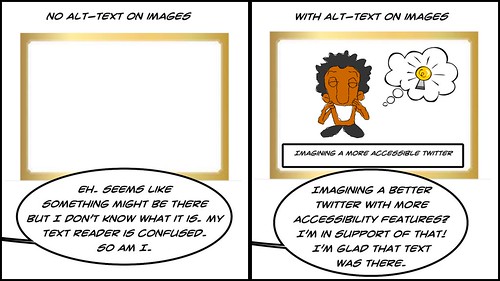
The above comic was an attempt to distill this idea of shifting away from the “read-and-run” mentality of online spaces, and maybe spend a little more time with a text or sharing. Engage the writer/creator in a conversation. Wonder out loud. Ask questions. Probe the topic.
Is there any doubt that the world would be a little better place if we took the time to talk, even in digital spaces, with each other? A “like” or a “plus one” or a “boost” or whatever is something, to be sure, but is it enough? Does it have depth? Nope. I can’t even remember what I liked yesterday and I bet you can’t either.

In Dr. Seuss’ not-well-known On Beyond Zebra, he imagines endless letters beyond our traditional English alphabet, spaces where creativity and imagination take hold, in Seuss-like ways, of course. The letters beyond Z were always there, we just never saw them.
Until we did.
This post is titled On Beyond Like because I am thinking that maybe, like the Seuss story, we have not yet gone beyond what the technology companies have designed for us. Remember: the likes and thumbs and all that are merely ways to gather data about what we like and don’t like, so they can push content and advertising our way. We are voluntary giving them tracking data on us. Imagine that.

This morning, I saw that Charlene had responded to my initial sharing of the comic. She asks a good question.
So… I agree likes are ubiquitous, and have, at best, lukewarm meaning. Should they go away? Should only “real” replies be used?
— 𝐂𝐡𝐚𝐫𝐥𝐞𝐧𝐞 𝐃𝐨𝐥𝐚𝐧𝐝 (@inspirepassion) November 5, 2018
And I don’t know the answer. While my impulse is to say yes, do away with the buttons, the reality is that this would take away much of the way people show appreciation and interact. There needs to be some middle ground, perhaps, one that I don’t yet see.
Do you?
Peace (beyond like),
Kevin