Can a Robot Play Music?

Consider this a musical diversion for me. I found an interesting article through my Bloglines aggregator that looks at a new robot being created in a lab (where else?) at Georgia Tech that can play percussive music – by itself and along with others.

Here is a quote from the article:

“By combining the ability to improvise algorithmically and having different physical limitations than a human, Haile can create a novel kind of human-machine musical interaction, leading to new music. Haile’s uniqueness lies in the robot’s ability to play acoustically with a vibrant sound while combining the computer capability of utilizing complex algorithms.“

There are a few video links embedded in the article to watch. It’s an interesting concept and, as a musician, I am not sure how I feel about the idea of a piece of tin and wires being created to make music.

Is it music if there is no emotion attached to the invention of the sound?

Peace,
Kevin

Who is this Taylor Mali?

At a workshop on creating a student-centered Poetry Cafe during this past weekend’s Best Practices in the Teaching of Writing at Western Massachusetts Writing Project, a participant told me that I just had to “discover Taylor Mali” and so I went searching for him and found his home on the ‘Net.

Taylor Mali is a slam poet, a teacher, a fast-talking preacher of words that flow from inside the soul, an advocate for education, and intense dedication to the cause of language flowing off the tip of the tongue for the old and the young … (hmmm, slipped in some of my own flow there for ya) and his strange yet very admirable mission is to use poetry to recruit teachers into public schools. He has set a mark of 1,000 teachers (he’s at 145 and tries to keep track of them via a blog).

Mali has gained some fame with his poem “What Teachers Make” and on his site, he notes how many unauthorized versions are now scattered throughout the Web, with little or no reference to the author/poet.

“Am I disappointed not to have received credit for writing this poem that has inspired so many? Used to be. But the truth will always come out in the end. And if I had to choose between inspiring teachers anonymously or not inspiring them at all and, I would choose anonymous inspiration every time.” — Taylor Mali

So go to his site, listen to his voice on his podcasts, read his words and, if you are inspired, buy one of his What Teachers Make pens to support the cause of the conversion of poetry, language and teaching. And if his words inspire you to enter teaching, let him know so you can be counted, too.
Peace,
Kevin

I Believe …in writers

Have you listened to NPR’s This I Believe series? Isn’t it wonderful to listen to the voices and (on the website of NPR) read through these very personal essays that focus in on a strand of belief from a range of people — some famous, and some not.

I was thinking about this the other as I was driving to school and caught Bela Fleck reading his essay entitled “Doing Things My Own Way.” Fleck is an amazing musician who has staked out some independent turf as a banjo player with a wide range of styles, dancing precariously sometimes between jazz, pop, country and world music. In the essay, Fleck talks about the impact of his grandfather on his own thinking styles and about how focused he has been on reaching into the musical voice inside of him even as he moved away from all sorts of traditional expectations of a banjo player.

“I believe in living with and giving into my obsessive side when it serves the music. I believe in doing things my own way.” — Bela Fleck

Inspired by Fleck, I have been working on my own This I Believe essay, which focuses on the belief that even the most reluctant of writers have something important to say and the path to finding that voice is critical.

microphone And so, here it is: I Believe … in Writers

And this all makes me wonder how to bring this format of belief into the classroom and create student-centered audio essays.

Peace,
Kevin

PS — A text version of the essay can be found here.

The ABC Book of Blogging

I came across this very wonderful resource put together by a group of fifth graders from Conyers, Georgia. They created an ABC guide to Blogging for Kids and it is a wonderful production that not only provides great information but also, as a project itself, showcases some wonderful inquiry and presentation by young writers and researchers (including the use of idioms). The entries include illustrations by the students. All around, this project is very nicely done!

The ABC Book of Blogging

Some examples from the students’ work:

  • From the Letter A: The anticipation we feel just before opening our blogs is awesome. We’re “all ears” listening to Mrs. Anne Davis and each other as we begin the day discussing what we will be doing during our blogging session. Some times we have our articles ready to post. We are most anxious to hear from our internet audience and can’t wait to answer comments. We’ve got a good attitude because this is “A Place to Be Heard!”
  • And on to Z: After good discussions full of dialogue from everyone we really get good ideas to use while blogging. Of course, that’s after we omit the zany comments. Derrick told us about Zaxlies, who don’t always project their voices. We have learned to project our voices and zero in on the writing. Sometimes Mrs. Davis tells us to zip our lips and blog away! We zip to the lab and zoom in on our computer screens. We have a lot of zest when we are writing on our blogs.

— from http://www2.gsu.edu/~coeapd/abc/index.html

Peace,
Kevin

Touring the Museum of Museums

Some days, you just stumble across a very neat idea and have to share it with other people, you know? Someone fed me this link to the Museum of Museums through a Delicious account and I was hooked.

This Museum of Museums collects links to the sites of any variety of museums from around the world, with the very ambitious idea of linking every single museum together for one mass site of collective knowledge. (It’s nice to have reasonable goals, I suppose). Art galleries, dinosaurs, music and any other topic that you can think of is someone’s museum obsession and can be found within the categories of this site. You can even view the Museum of Bad Art, if that is more to your taste.

And then, there are those virtual museums — the places that don’t exist in the real world and yet, are repositories of information. For example, there is a museum for toaster ovens, if that is your thing. And the Museum of Talking Boards (meaning: Ouiji) that can raise some goosebumps on people.

I can envision some neat virtual field trips from my classroom, with links and reactions and descriptions right from the class Weblog site.

Peace,
Kevin

Viewing the Read-Write Web

The emergence of technology as a source for user-generated writing, audio and video files is intriguing to me as an educator, but I still wonder about how everything will pan out in a few years. Will it all become a commercialized jumble of incoherence? (MySpace is an absolute mess that began with promise, I think). Or will we find a path to utilize these resources to generate critical learning and collaboration for our young student writers and creators?

read-write web

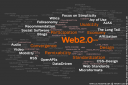
Last semester, I took a course at UMass and wrote a final paper about my thoughts on the integration of the Read-Write Web (also known as Web 2.0 in some circles) into classroom practice and so I share it here for anyone who might be interested in what I wrote. Will Richardson continues to explore the possibilities of these technologies in education in interesting ways and his Weblogged site is always worth a gander. My own paper and inquiry remains a work in progress for me and a piece of writing I will return to at a later time for more reflection and work.

Read Kevin’s Seminar Paper

O'Reilly Web 2.0
(from http://en.wikipedia.org/wiki/Image:Web20_en.png)

Peace,
Kevin

The World of the Saxophone

Since blogging is often a source of obsession as well as of information, I figured it was time to check out some sites dedicated to the windy world of the saxophone.

sax.jpg

I used my Delicious account to track down some sites as opposed to Google because I was interested in meandering through some other folk’s networks and interests as I pursued my own. So here are some sites of interest to the saxophonists out there:

  • First, there is the Wikipedia entry on the Saxophone. One interesting fact is that Adolph Sax, who created the instrument, designed over 14 different models of the musical invention in the 1800s.
  • There is a neat timeline of patents related to the Saxophone at this site. The last patent (according to this site) was in the 1920s and had to do with a key that makes playing a few multiple notes a bit easier.
  • Here is a photo gallery of all sorts of saxophones, spread out across the years and companies. Very nice pictures here. I liked the last few folders that shows rarities and odd assortments, such as the Slide Saxophone.
  • Apparently, saxophone players are feeling underprivileged in the music world because there is a Saxophone Alliance. The group even has a constitution and bylaws. This is serious! Actually, it’s nice to know that all sorts of communities of interest can spring up on the ‘net.
  • One fellow has designed a site to make fun of saxophone solos in pop songs over the years and it is quite funny. The site provides short audio clips of the solos and there are even grades for the solos there (example: the solo in Billy Joel’s Still Rock and Roll to Me garners a B while Huey Lewis and the News’ Back in Time gets a lowly D grade.
  • Finally, check out this classic video clip from the one and only Sesame Street on how a saxophone is made in a factory. This is from YouTube, just so ya know, so I can’t vouch for copyright protection. (Ahh, go ahead and watch it — it’s very neat)

Peace,
Kevin

Valuable Resources and Information

This summer, the folks at Tech Matters were kind enough to load us up not only with cool ideas, but also with resources. The series of Seven Things from Educause is one example of very useful information for teachers and educators. Here are some readings/handouts that I think are really valuable and worth sharing with colleagues either in the hallways or in workshops:

7 Things You Should Know About PODCASTING
7 Things You Should Know About WIKIS
7 Things You Should Know About Collaborative Editing
7 Things You Should Know About Social Bookmarking
7 Things You Should Know About Screencasting
7 Things You Should Know About Videoblogging

Peace,
Kevin

Using Vaestro for Audio Messages

After listening to a Going-Back-to-School Podcast by Bud the Teacher and his friend, Darren (at a site called A Difference), on Labor Day, I began checking out Vaestro as a possible source for a deeper use of audio for Weblogs. Vaestro is an online audio messaging and recording/playing system that is free, and may allow for greater collaboration for my students this year.

The site allows you to record outgoing messages and encourages anyone with a computer and microphone to leave a message. It’s kind of like a free online companion to Skype. I found an interesting article by Wesley Fryer about the use of such services for collaboration in education.
As part of this experiment, I created a message and I am hoping some folks will leave me an answer.

Head here to listen and respond to my Vaestro Message.

Peace,
Kevin

Tech Book Concept

I was recently asked to join two very established professors in the field of composition — Charlie Moran and Anne Herrington — in launching a book proposal that looks at the convergence of technology and writing. This book proposal stems directly from a conference that the Western Massachusetts Writing Project co-sponsored last spring at the University of Massachusetts that centered on how technology is being used in writing classrooms. The conference was called Conference on Writing, Teaching and Technology and featured a wide range of presenters.
Charlie, Anne and I would like to take it all one step further by focusing in on the stories of what teachers are doing in the classroom to adjust to these changes in grades 4-13. We are still working on the initial proposal for article abstracts (using Writely for collaboration, by the way) but the three strands of focus will be:

  • How is technology changing our perceptions of writing;
  • What are teachers doing to integrate these new perceptions of writing;
  • And how are teachers measuring the outcomes/assessment of student writing.

We hope to have a call for proposals out in the next few weeks and I want to tap into the Technology Liaison network for possible submissions. For myself, I feel honored to have been asked by Anne and Charlie to help edit this future collection that I can see being a very valuable resource for many classroom teachers.
Peace,
Kevin